

What Parents Ask Me Most About Play Therapy
So, you’re looking for a therapist for your child and you keep seeing the words play therapy pop up everywhere. You’re probably wondering:
“Is this just a fancy term for playing with toys?”
“Will this actually help my child regulate their big feelings?”
“Why does every therapist in Denver seem to think play is the answer?”
Take a breath. You're not alone. These are the exact questions parents ask me every week. If you're curious about whether play therapy is the right fit for your child, you're in the right place.
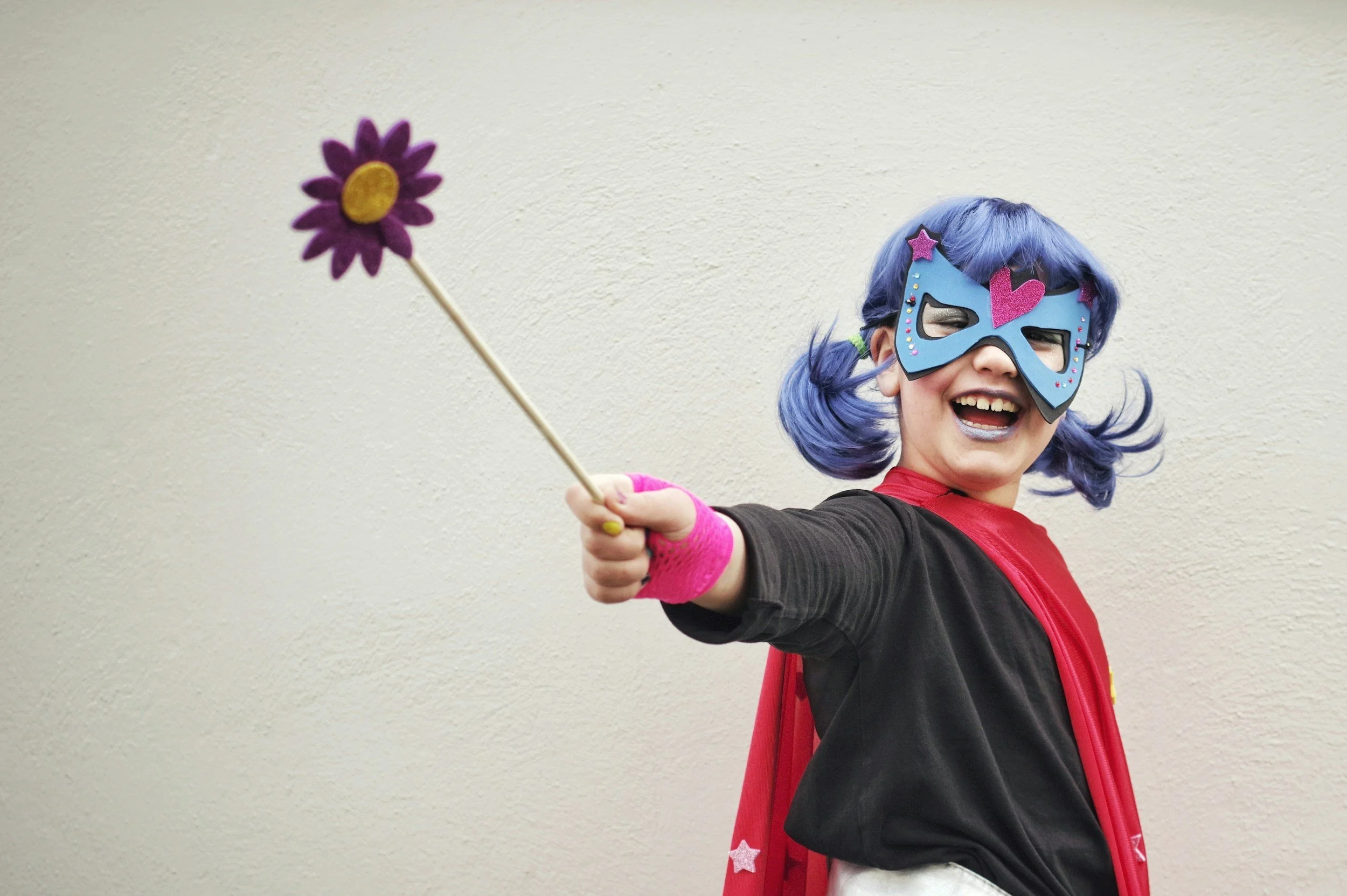
It is normal to have questions about play therapy
Let’s talk about what play therapy actually looks like, what it does (and doesn’t do), and how it might be the thing that finally helps your child feel seen, safe, and supported.
Wait… Is This Just Playing?
Totally fair question. From the outside, it can look like kids are just building with blocks, painting with glitter glue, or turning stuffed animals into superheroes.
But here’s the magic: while your child is playing, a trained play therapist is using that play to help them process big emotions, practice new coping skills, and experience what it feels like to be deeply understood.
In short, play therapy is therapy , just on your child’s level.
Children don’t sit on a couch and talk about their day like adults do. Their brains aren't wired that way yet. What they do understand is play. It’s their language, their way of exploring emotions, and their safest path to healing.
What kinds of challenges can play therapy help with?
Play therapy can help kids who are:
Having frequent meltdowns over seemingly small things
Struggling with anxiety, sadness, or fears they can’t quite name
Dealing with big life changes like divorce, moving, or a new sibling
Having trouble making friends or managing sibling relationships
Showing aggressive, withdrawn, or confusing behavior at home or school
Sound familiar? Then it might be time to explore play therapy as an evidence-based, developmentally appropriate way to help.
How does play therapy actually work?
Picture this: Your child walks into a cozy room filled with inviting toys, art supplies, games, and sensory materials. It’s not chaotic or overwhelming. It’s calm, structured, and full of creative options.
What happens next isn’t random. As a play therapist, I use these materials intentionally to:
Mirror and name emotions that show up in play
Model emotional regulation, problem-solving, and flexible thinking
Support your child in exploring hard things at their own pace
Gently challenge unhelpful patterns or stuck stories
Sometimes this happens through a dollhouse. Sometimes it’s finger paint. Sometimes it's pretending to rescue a dragon from a volcano made out of kinetic sand. Either way, the child leads, and I meet them where they are with curiosity and connection.
Will my child act out what is happening/or what happened to them in play?
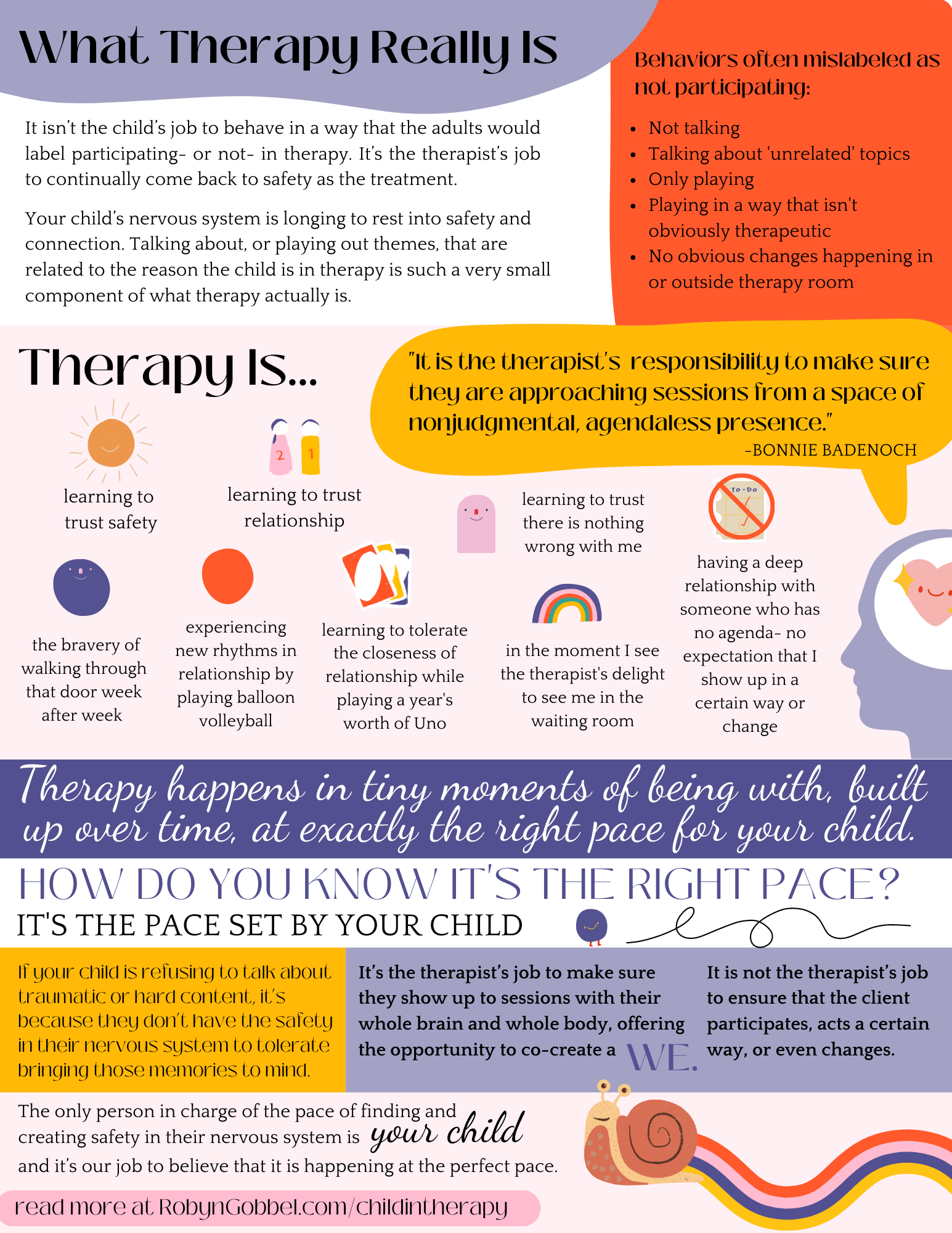
Sometimes it is helpful to keep in mind what Therapy Really Is! Thanks to Robyn Gobbel for this infographic. You can download and print this by clicking on the image above.
Not usually in a literal, scene-by-scene way. What’s more common is symbolic play. For example, if your child experienced a scary move, they might use a Lego character who keeps losing their home. If they’re feeling overwhelmed at school, they might turn into a bossy dinosaur who yells at everyone.
These symbols give us a window into your child’s inner world. From there, I can help them experiment with new ways to be in that world: safer, stronger, and more regulated.
But are they learning actual skills... or just playing?
Great question. This comes up a lot. While we’re not drilling coping skills on a worksheet, your child is absolutely learning through the play. In fact, the learning sticks better because it’s experiential, not forced.
In play therapy, your child might:
Practice calming down when a game gets intense
Learn how to ask for help when things feel too hard
Build confidence in their ideas and creative problem-solving
Explore the cause-and-effect of their actions in a safe setting
I’m not lecturing. I’m modeling. I’m helping them try things on, get curious, and integrate new ways of thinking and being.
Will I be part of the play therapy sessions?
Sometimes, yes. Sometimes, not right away. Most kids do their best work in a space where they can take emotional risks without worrying about what Mom or Dad thinks. That doesn’t mean you’re excluded — it just means we respect the boundaries of their process.
When it makes sense, we (your child and I) will invite you in. Sometimes that looks like joining a session to play together, and sometimes it’s your child wanting to show you what they created. If you’re in the room, you’ll be in it, not sitting on the couch observing, but playing, connecting, and supporting your child’s growth.
Will you tell me what they did in the session?
Here’s where we balance transparency with therapeutic privacy.
I’ll always keep you informed about your child’s progress toward their goals and the themes I’m seeing. But I won’t give you a play-by-play of what toys they used or what stories they acted out.
Why? Because your child deserves a safe space to explore freely without worrying about it being reported back. But rest assured, you’ll know how they’re doing and how we’re tracking progress together.
How will we know when play therapy is “working”?
Good therapy doesn’t last forever. From the very beginning, we’ll set clear goals together so we know what we’re working toward. We will also have regularly scheduled parent consultation sessions.
We’ll track progress in concrete and meaningful ways, like:
Fewer meltdowns or quicker recovery
Improved confidence or communication
Better peer or sibling relationships
More flexibility in how they respond to stress
When your child reaches those milestones, we’ll begin discussing the end of therapy in a way that feels empowering for everyone. Saying goodbye is part of the process, too, and we’ll do it with care.
What if the problem is about how my child relates to us?
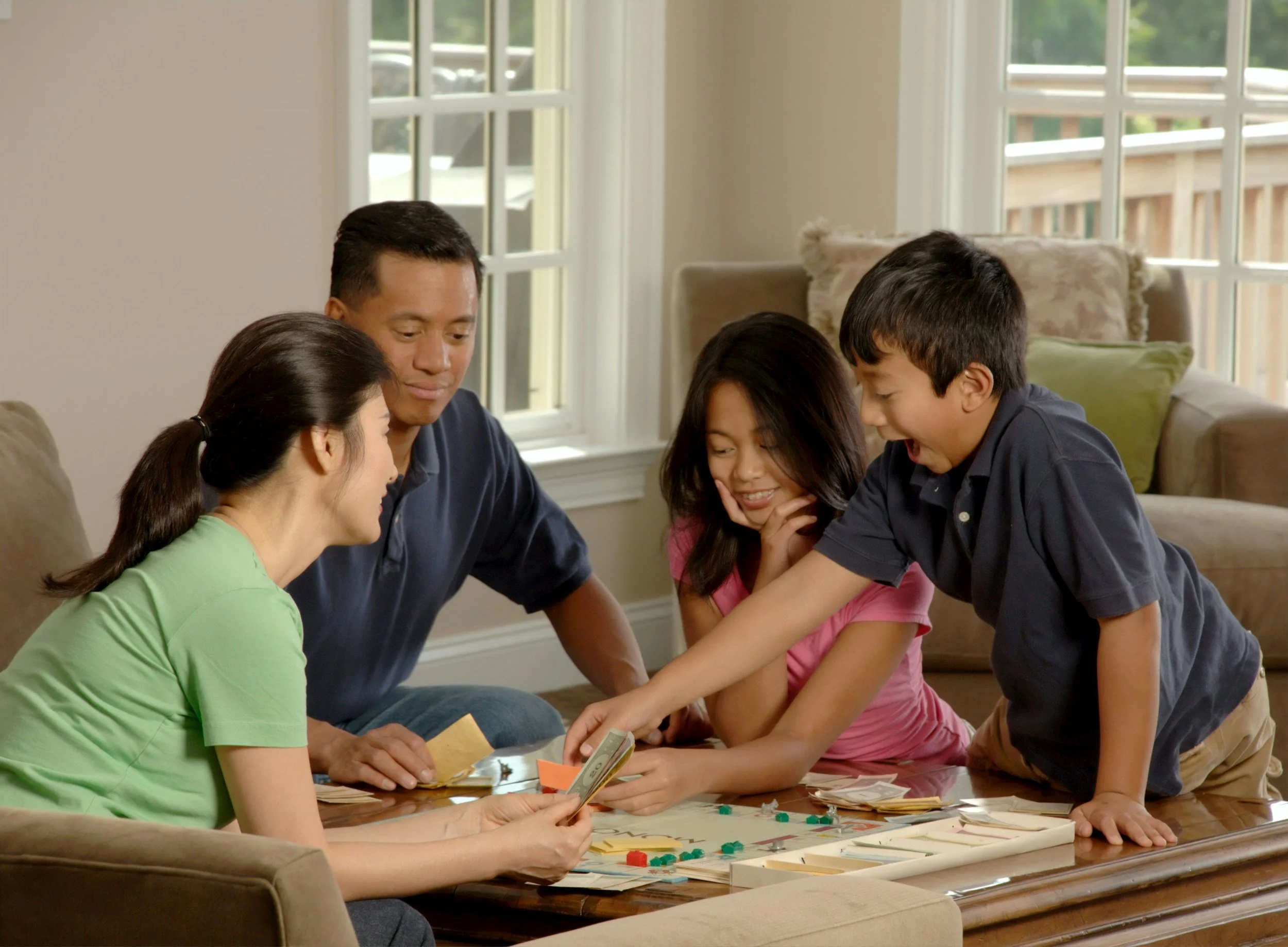
Then we might explore family play therapy. That can look like:
Sessions with the whole family to work through dynamics
Targeted sessions where one or both parents join the child
Co-play activities that strengthen attachment and communication
It’s not about assigning blame. It’s about creating new patterns of connection, with support and guidance.
You made it to the end, now what?
If your gut is telling you your child needs support, even if you can’t quite explain why, that’s worth listening to. Let’s talk about it.
I offer a free 20-minute video consultation so we can get to know each other, answer any lingering questions, and see if play therapy might be the support your family’s been looking for.
Erin Bennetts, LCSW RPTS specializes in play therapy in Denver, CO, helping families find more peace, play, and connection at home. With a warm and down-to-earth style, Erin supports kids and partners with parents to decode challenging behaviors, support emotional growth, and bring a little more ease into everyday life.