

A Parent’s Guide to Play Therapy in Denver, CO
When Parenting Feels Harder Than It Looks
Southwest Metro Denver: Littleton, Highlands Ranch, Lone Tree, Ken Caryl, and Cherry Hills can look like a dream on paper. Great schools. Welcoming communities. Hiking trails and splash pads.
But parenting here isn’t always as picture-perfect as it seems.
You might be noticing that your child feels everything deeply. Maybe they shut down, melt down, or get stuck in rigid patterns. You’ve probably tried sticker charts, breathing tools, new routines, or that parenting podcast that promised quick results.
If you’re reading this, you’re likely exhausted, concerned, and wondering if your child needs something more. You’re not alone. And you’re not doing anything wrong. You’re showing up, and that matters.
What Play Therapy Really Is and Why It Works
Children express themselves through play long before they have the words for what they feel. Play is how they process confusion, rehearse real-life scenarios, and make sense of their world.
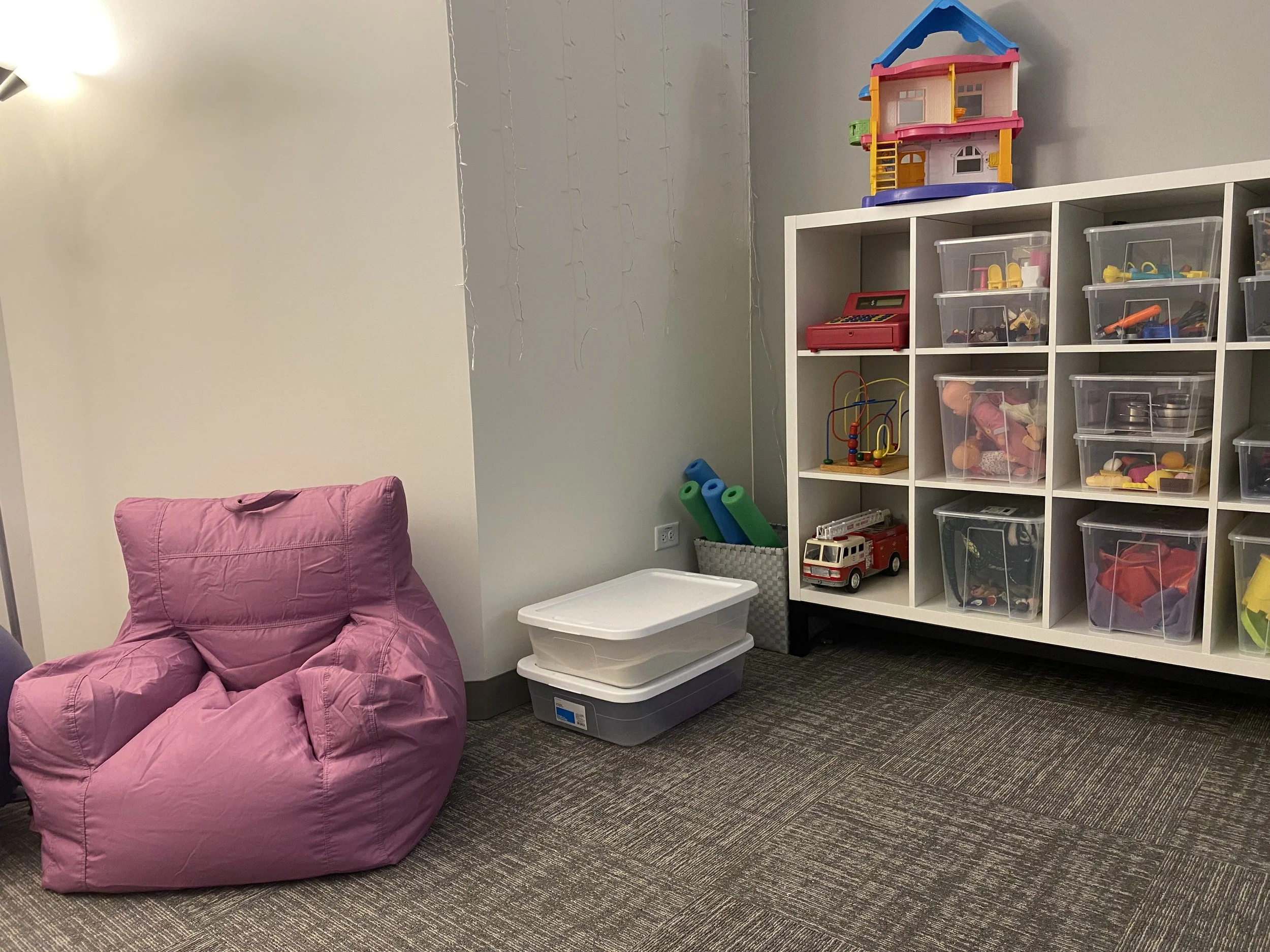
Children use a variety of toys, materials and forms of play in Play Therapy. These include but are not limited to: sensory play, dramatic play, art, games, sand, and more!
Play therapy creates a structured, safe, and developmentally aligned space where that expression becomes a healing experience. A trained therapist tracks themes, emotional cues, and symbolic meaning to help your child explore what’s happening inside without forcing them to explain it.
To an outsider, it might appear to be a child playing with action figures or drawing. However, within that play, real emotional work is taking place. Play becomes the language of the child’s nervous system: raw, intuitive, and honest.
This process is grounded in neuroscience and attachment. It’s not just “fun” or a distraction. It’s a highly attuned, emotionally corrective experience that helps your child feel safe, connected, and more in control over time.
Who Play Therapy Helps
Play therapy is a powerful tool for kids who feel more than they can say. That might show up as emotional outbursts, rigid behaviors, sudden withdrawal, or chronic overwhelm.
Many of the children I work with are navigating anxiety, sensory sensitivity, intense emotions, grief, or family changes. Some need help making sense of social challenges. Others just seem “off,” even if it’s hard to name why.
Play therapy isn’t just for kids in crisis. It’s for children who need help learning to regulate, relate, and feel understood.
Will Play Therapy Work for My Sensitive or Neurodivergent Child?
Many of the children I work with are deeply sensitive or process the world in unique, neurodivergent ways. Maybe you’ve been told your child is “too much” or “too rigid,” or you’ve tried a dozen parenting strategies without lasting success.
Play therapy meets these children where they are. It doesn’t ask them to explain what’s going on; it gives them a safe, structured space to show it through play, movement, and other forms of self-expression.
For kids with sensory sensitivities or social-emotional delays, that’s a lifeline. They don’t have to fit into a system that wasn’t built for them. We build the therapeutic process around them instead.
A previous assessment or formal diagnosis isn’t necessary to begin play therapy. If we discover that your child may benefit from additional evaluations or services, I can provide referrals and coordinate care with other professionals in the Denver or Littleton area. You don’t have to navigate those steps alone.
What About Older Kids?
Tweens and teens can benefit too. While therapy shifts over time to include more reflection and verbal processing, many older kids still respond well to creative and expressive interventions.
For teens who are guarded or skeptical, the chance to connect without pressure to draw, move, build, or use metaphor can be deeply relieving. Play-based therapy gives them a way to explore emotions without having to explain everything right away.
What to Expect Over Time in Play Therapy
Play therapy doesn’t follow a linear path. It unfolds in phases, each honoring the pace of your child’s nervous system. Progress may be subtle at first, but meaningful change builds with safety and consistency.
Getting Started: Building Trust (Orientation)
In early sessions, your child may explore quietly, test boundaries, or hover. This phase is about establishing safety and getting to know the space and the therapist.
Deepening the Work (Exploration)
Once trust is built, symbolic themes begin to emerge. Your child may replay certain stories, repeat characters, or show more emotional risk in their play. These are signs of meaningful exploration.
Growth and Integration (Integration)
As therapy continues, your child begins experimenting with new roles and outcomes. You may notice shorter meltdowns, more flexibility, or a stronger sense of calm. These shifts signal nervous system regulation and growing resilience.
Saying Goodbye with Intention (Termination)
When therapy nears completion, we support your child through the process of saying goodbye. Closure is part of the healing—it helps your child carry the work forward in their life.
What Progress Looks Like at Home
You might notice fewer meltdowns or quicker recovery after a hard moment. Maybe your child starts using emotional words they didn’t before. Or they begin reconnecting more easily after conflict. For some, sleep improves. For others, it's the ability to pivot when something unexpected happens.
One parent recently told me, “I’m not tiptoeing around my child’s emotions anymore. I finally feel like I understand what’s going on under the surface.” That kind of clarity can be just as powerful as any strategy.
Your Role Matters, Even If You’re Not in the Room
Play therapy centers the child, but parents are never left out. You’ll have regular parent consultation sessions where we reflect on your child’s progress and explore what’s happening at home. I utilize an integrated therapy approach where your work as the parent occurs alongside your child’s therapy process (we are building the scaffolding needed to sustain long-term change). We follow the Raising Kids with Big Baffling Behaviors developed by Robyn Gobbel. Once you have completed the structured sessions (8-12 sessions), we move to more intermittent parent consultation appointments for as long as your child remains in individual therapy.
Integrated Parent Consultation sessions utilize the Raising Kids with Big Baffling Behaviors Parent Course Modules. We then apply the concepts, strategies, and support to your unique family’s needs and desired outcomes.
These conversations aren’t reports or lectures. They’re collaborative. I will do a little bit of teaching, and then we will apply what you know about your kiddo and what I am learning about them in session. We will talk about what your child’s behavior might be communicating, how you’re responding, and how to stay emotionally connected even during the hard moments.
Many parents tell me these sessions help them feel more resourced, less alone, and better able to show up for their child. That’s not a side benefit, it’s part of the process. You also get lots of electronic resources that you can reference as many times as you would like, print, and share with other providers/caregivers.
A Therapy Practice Built for Southwest Denver Families
I built my practice in Littleton because this is my community, too. I’m raising my family here. I’ve waited in the same carpool lines, sat through the same parent-teacher conferences, and tried to juggle the same 15 things at once.
Therapy shouldn’t require a downtown commute or an unfamiliar office across town. It should feel local, accessible, and like a natural part of your family’s rhythm.
Most families I work with are stretched thin. That’s why I created a space that fits real life not a perfect schedule. You don’t have to go far to get meaningful support.
Why Choose Play Therapy in Littleton, CO?
Choosing a play therapist in Littleton, CO means your child gets care rooted in the rhythms of your community. I’ve intentionally networked with other providers, schools, specialists, sports, and activities in the SW metro area to keep the support as local as possible. Therapy becomes less about appointments and more about integrating support into your family's routine. Your child feels safe in a space that feels familiar and nearby.
How to Choose the Right Play Therapist in Denver

Making sense of all those letters after a potential therapists name can be a challenge. I break it down in a previous blog post as well
Who’s Who in Child Therapy: Understanding Mental Health Professionals in Denver CO
Credentials are important. Look for a Registered Play Therapist (RPT or RPT-S), someone with advanced training in child development, play therapy theory, family systems, and neuroscience. If you need additional information and assistance navigating the alphabet soup of credentials, please check out my previous blog, “Who’s Who in Child Therapy: Understanding Mental Health Professionals in Denver, CO”.
But beyond credentials, the relationship matters most. When you meet a potential therapist, notice how you feel. Do you feel respected, welcomed, and able to be honest? That gut feeling is meaningful.
Also consider location, schedule, insurance options, and their approach to parent involvement. You want a therapist who fits your child’s needs—and your family’s life.
What Parents Can Expect from the Therapy Process
Sessions are typically weekly and last 40-45 minutes. A quick check-in before or after the child’s session to confirm logistics helps us stay on track as well.
Parent consultations are structured, intentional, supportive, and scheduled regularly so we can stay connected and adjust goals as needed. These sessions provide the essential scaffolding to support your child’s therapy process in the short term (foundation) and overall outcomes long-term (change that sticks)!
Therapy length varies. Some kids show shifts after a few months. Others benefit from a longer process. Progress shows up in subtle ways: quicker recovery after hard moments, more flexible responses, better sleep, or stronger social connections.
If something feels unclear along the way, we’ll talk about it. You don’t have to guess what’s happening.
Frequently Asked Questions About Play Therapy
Is play therapy covered by insurance?
Some plans offer partial reimbursement. I can provide documentation for out-of-network claims and walk you through the process.
What ages is play therapy for?
Typically ages 3–12. Teens can also benefit through creative or expressive interventions.
Can I stay in the room with my child?
Play therapy sessions are usually one-on-one to create a safe emotional container. We will discuss if/when it makes sense for a parent to be in the room during a session (be prepared to play). Parent support happens outside the room through consultation.
How will I know if therapy is working?
You may notice fewer outbursts, smoother transitions, or more emotional language. We’ll track changes together through themes, behavior, and your observations at home.
Is a Registered Play Therapist required?
Not legally, but an RPT or RPT-S has specialized training in working with children. It’s a sign of deeper expertise and commitment to developmentally aligned care.
How often are parent consultations scheduled?
We meet consistently (Weekly or bi-weekly) at the start of your child’s therapy process during the first 8-12 sessions, then taper to match your child’s therapy progress. Parent consultation occurs in phases that are parallel to the child’s therapy process.
What if my child doesn’t want to go to therapy?
That’s common. We’ll talk about how to introduce the idea in a developmentally appropriate way.
Let’s Talk About What’s Going On
If your child’s emotions feel bigger than what you can handle on your own, you don’t have to go through it in isolation. Play therapy and integrated Parent Consultation can offer meaningful support and you don’t have to drive across town to find it.
I offer a free 20-minute video consultation so we can talk through what’s happening, answer your questions, and explore whether this feels like a good fit. No pressure. Just a chance to connect.
About Erin Bennetts, LCSW, RPT-S

I’m a Registered Play Therapist-Supervisor in Littleton, CO. I specialize in helping kids build emotional resilience through developmentally aligned, neuro-informed, relational therapy. I also support parents because healing happens in relationships, not just sessions.
And yes, I believe in glitter ponies, silly voices, and the kind of play that helps children feel seen for who they are.