

Who’s Who in Child Therapy: Understanding Mental Health Professionals in Denver CO
Looking for child therapy in Denver CO and confused by all the letters (aka alphabet soup) behind therapists’ names? You’re not alone. As a parent, you want the best support for your child—but between LPCs, LCSWs, LMFTs, RPTs, and more, it can feel like you need a degree yourself just to choose the right provider.
This guide will help you make sense of the credentials you might see when searching for a Littleton therapist. By understanding the types of professionals available, you’ll feel more confident selecting someone who aligns with your child’s needs—and your parenting values.
Whether your child is struggling with emotions, behavior, friendships, or school, the right therapist can make all the difference. This guide will walk you through the common credentials, what each type of professional does, and when you might choose one over another.
What Kind of Therapist Does My Child Need?
It’s common for parents to wonder whether their child’s challenges are just a phase or a sign of something deeper. Maybe your child has been melting down more often, avoiding school, or withdrawing socially. You might have asked yourself, “Is this normal?” or “Do they need help beyond what I can give?”
This is where child therapy can help, but only if you find a professional who understands how to work with children in developmentally appropriate ways. Here’s a breakdown of common mental health professionals you might come across in your search for child therapy in Denver CO.
Licensed Professional Counselor (LPC or LPCC)
An LPC is a Licensed Professional Counselor, while an LPCC is a pre-licensed professional working under supervision toward full licensure. Both typically hold a master's degree in counseling and are trained to help children, adults, or families cope with emotional and behavioral challenges.
Counselors often use a variety of approaches, including play therapy, cognitive-behavioral techniques, and emotion-focused work. LPCs do not prescribe medication or perform formal psychological testing, but they often work closely with pediatricians, psychologists, or psychiatrists for referrals if needed.
If your child is dealing with anxiety, emotional regulation issues, or behavior concerns, an LPC with child therapy training may be an ideal fit.
Licensed Clinical Social Worker (LCSW)

LCSWs also hold a master’s degree, but their training is rooted in social work. They are licensed to diagnose and treat mental health disorders and often bring a systems-based perspective—looking not just at the individual child but at how their environment, school, and family dynamics play a role in their well-being.
An LCSW can be especially helpful if your child’s therapy involves navigating complex family issues, trauma, or school advocacy. Like counselors, many LCSWs pursue advanced training in child-specific modalities, including play therapy or trauma-informed care.
Licensed Marriage and Family Therapist (LMFT)
LMFTs are trained to work with children, couples, and families, focusing on the relationships between people rather than just individual symptoms. If your child’s challenges are deeply connected to family communication patterns, transitions like divorce, or sibling dynamics, an LMFT may be the right choice.
They are equipped to involve the entire family in therapy, which can be especially helpful for creating change across the home environment—not just in your child.
Psychologist (PhD or PsyD)
Psychologists have advanced doctoral training and are licensed to diagnose and treat mental health conditions. They are often the go-to providers for psychological testing or evaluations, which can be helpful if you’re exploring ADHD, learning disorders, or autism.
Some psychologists offer therapy as well, though many focus on assessment and collaborate with LPCs, LMFT’s or LCSWs for ongoing treatment.
Psychiatrist (MD) or Psychiatric Mental Health Nurse Practitioner (PMHNP)
These are the only mental health providers on this list who can prescribe medication. If your child may need medication to manage symptoms of depression, anxiety, ADHD, or another condition, you’ll need to consult with a psychiatrist or PMHNP. These professionals often work in collaboration with a child’s therapist to provide holistic care.
Medication is not a first step for many families, but when used thoughtfully in combination with therapy, it can be an important part of your child’s healing.
Is a Registered Play Therapist (RPT) Necessary?
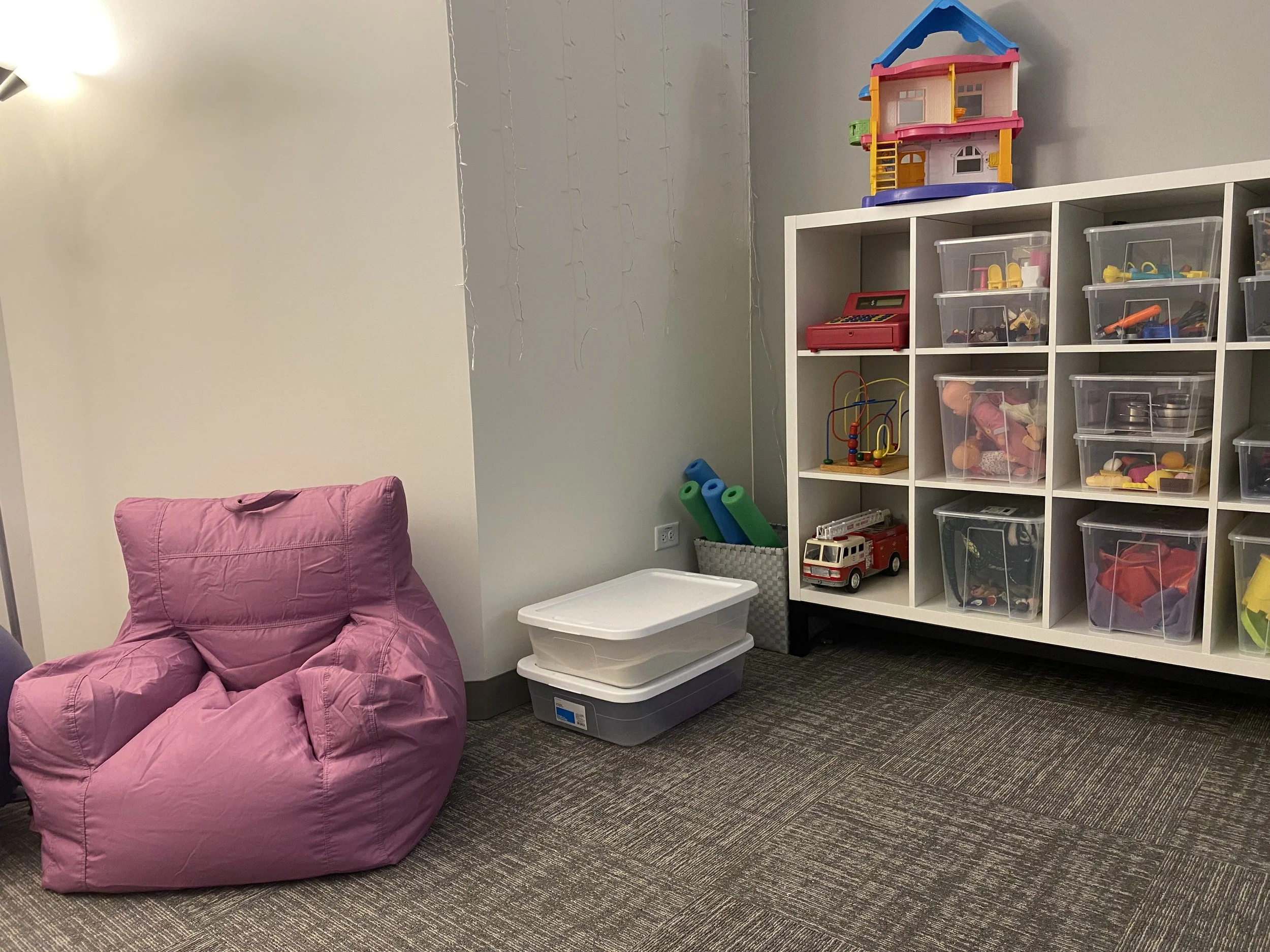
Registered Play Therapists take a lot of pride in the selection of toys, materials, and set up of the play room!
Many licensed child therapists in Denver integrate play therapy into their work. However, some go on to complete advanced training and supervised experience as a Registered Play Therapist (RPT) or Registered Play Therapist Supervisor (RPTS). While it’s not required to practice play therapy, the RPT credential reflects a higher level of specialization and a strong commitment to working with children using evidence-based, developmentally informed approaches. For parents seeking a therapist who is deeply grounded in play-based work, this credential can offer added peace of mind.
How Do I Choose the Right One?
It all comes down to what your child needs and how you want/need to be involved as a parent. Some families benefit from parent consultation services, where the therapist works closely with you to build strategies at home that support your child’s progress. (Spoiler alert- if you choose to work with me, parent consultation is a non-negotiable component of the treatment plan) Others may seek ongoing play therapy for their child to process emotions, improve behavior, or build social skills.
Looking for a detailed Guide to Play Therapy? Read more in my blog “A Parent’s Guide to Play Therapy in Denver, CO”
Finding the right therapist for your child can feel overwhelming, but you don’t have to make the decision alone. Understanding the credentials is a helpful starting point. From there, trust your instincts and seek a therapist who makes both you and your child feel seen, heard, and supported. If you aren’t sure where to start, look for a therapist who offers a brief phone consultation to discuss your concerns and guide you to the right kind of support. Feel free to check out these tips for getting the most out of that initial consultation with a potential child therapist.

Erin Bennetts, LCSW RPTS specializes in child therapy in Denver, CO, helping families find more peace, play, and connection at home.
With a warm and down-to-earth style, Erin supports kids and partners with parents to decode challenging behaviors, support emotional growth, and bring a little more ease into everyday life.